
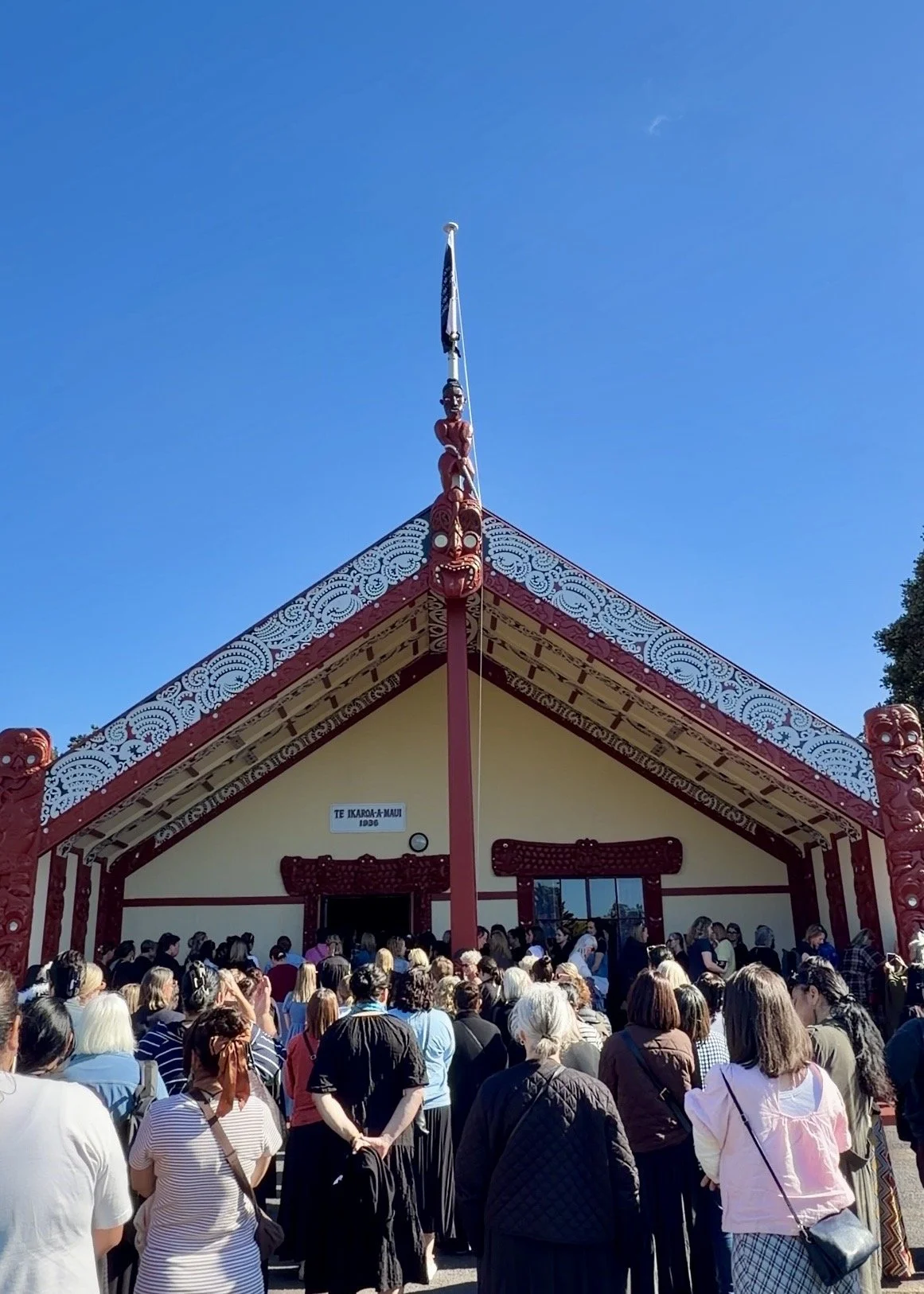
Taranaki was home to this year’s MAC Hui Ā Tau. Two hundred MAC supporters were welcomed onto the Ōwae Marae in Waitara - where the wharenui provides a tranquil haven of bespoke carvings and tukutuku, reflecting the stories, whakapapa and tikanga of the hapū. The manuhiri were full of praise and gratitude for the manaakitanga shown by the Ōwae Marae hosts.
School leaders had come to visit and hear the cultural stories of this special region. These included traditional stories of the Maunga, culturally historical accounts of the Taranaki rohe, including the defining Parihaka chapter, and how the past has shaped and continues to influence the rohe.
Just as these stories unite Taranaki Māori, the sharing of them similarly connects those listening in. The unity built throughout the hui was apparent on the dance floor at the Kai Hākari (dinner) by Claire, a deputy principal new to the MAC Kaupapa. She said, “This is just like being at a family wedding!”
It is nigh impossible to feel lonely at a MAC hui. At the very core of the Kaupapa is collaboration, trusting and aroha.
The MAC Kaupapa is unique. It is more than a PLD programme for school principals. It transforms leaders who are willing and courageous enough to take a deep cultural dive, change their hearts and minds, and embrace the strengths and reality of a Māori world view. It is an experiential opportunity that will enable them to lead their kura with cultural confidence.
The MAC Kaupapa was built on the premise that Tamariki Māori have a right to succeed as Māori, in a kura that reflects the richness and validity of their own culture and identity. Groups (collaborations) of principals, examine their own cultural beliefs and values in a trusting and supportive environment, with expert facilitators alongside them. Step by step, they come to appreciate that a Māori world view has equal legitimacy and thus equal rights to expression in their schools.
What experienced MAC principals have repeatedly found over time is that their Tamariki Māori want to engage more in all school activities – because they see themselves reflected in their school, and feel they belong.
Hoana Pearson, Te Pitau Mātauranga, Board Chair - Te Arahou o Aotearoa Trust and the team of Kaihoe Mātauranga (Facilitators of the MAC Kaupapa) put this observation to the test, commissioning independent research first by a group of Auckland University researchers in 2016 and this year, by researchers from the New Zealand Council for Education Research (NZCER). Both research reports confirmed the principals’ observations and found that Tamariki Māori in MAC schools had lifted their academic achievement and school attendance rates as well. You can read the most recent full research report from NZCER Here.
Leanne Otene, Tumu Whakarae (National Director), presented the latest research results on the final day of the Hui Ā Tau. On all measures, Tamariki Māori in MAC schools were outperforming the national Māori average, whether in academic achievement or attendance. Further, surveys and interviews with MAC school principals demonstrated the commitment of principals to the kaupapa and showed how engaging with the MAC had advantaged them both personally and professionally. The MAC is instrumental in achieving culturally sustainable leadership. Unsurprisingly, it was also a solution for schools trying to address the equity gap that exists both within and between schools.
In addition, the NZCER research indicated that the MAC had now developed reach beyond schools’ gates and was showing signs of positively influencing school communities, teachers, students, colleagues and Boards both locally and nationally. “We call it the ripple effect,” said Leanne. She went on to explain the various MAC packages available for 2027, all of which you can access here.
Dr. Ruakere Hond (Taranaki Iwi, Ngāti Ruanui), gave a potted history of Taranaki’s historic battles and land wars. “Violence begets violence,” he said, “and that becomes the norm, which is repeated over and over.” Peace was negotiated, but not before land had been illegally confiscated and Te Wherowhero became the first Māori King.
Waitara, with its river delta, was a magnet crop growing area, including kumara, pumpkin and wheat for bread making, some of which was exported to Australia. For a time, Taranaki Māori controlled their own economy, with eight flour mills positioned alongside the rivers. This activity did not sit well with the colonisers who then made Waitara a focus. They coerced locals into selling their land, reignited war, and burnt their crops.
Dr Hond explained that in response, marae introduced a new tikanga ‘Tūkua’ which means don’t feed the anger, do not retaliate. Respond to all hatred with good will.
The Māori Councillors’ Panel followed, and questions were put to Dinnie Moeahu (Ngāruahine, Te Arawa, Taranaki Iwi) and Gina Blackburn (Ngāti Mutunga, Te Ātiawa, Taranaki Iwi), the first Māori woman to be elected in a general seat.
In answer to a question on the need to retain Māori representation on Councils, Dinnie said, “When you look at a map of the land that was confiscated in Taranaki, you can see the reason for having Māori representation.” Gina added “It is important to share korero with Tamariki which must come from the mana whenua of your rohe.”
Building relationships was important to both Councillors. Rangitahi participate in local planning. Gina and Dinnie agreed that their local government supports the involvement of the younger generation, who bring current perspectives which can guide better Council decisions. They also noted that the Taranaki Maunga has ‘person’ status giving people of the Taranaki a sense of identity and history. Restoration planting programmes involve schools, and Tamariki can see and understand their own contributions and connection to the rohe.
They called on school principals to lead from the heart and be good Treaty partners, upholding the values and obligations outlined in Te Tiriti o Waitangi. That way Tamariki become Treaty-centric leaders of the future. They also suggested that principals ensure Tamariki understand democracy and can participate in democratic processes.
The Principals’ Panel of Katherine Pascoe (Ngāti Porou) Puketapu School; Graham Sands (Ngāti Ruanui, Ngāti Ruahine, Ngāti Maru) Midhirst School; and Jeremy Ogle, Woodley Kura Tumuaki, expressed their own experiences of the MAC Kaupapa and how MAC involvement has contributed to outcomes in their respective schools. MAC Kaihoe, past and present, were praised for their outstanding service to schools. They included Damon Ritai, Scott Walden, Whaea Tiri, Tiaki Pokere, Anaru Morgan, George Ihimaera, Brenda McPherson and Kim Nikora.
Advantages of being a MAC Kura included:
Learning how to conduct a school pōwhiri for special visitors and new staff.
Experiencing marae stays.
Having Kaihoe speak to School Boards to help them understand the ‘why’ of MAC
Having access to ‘Te Whare Tapu O Te Ngākau Māori’ as a framework for the MAC practice.
Developing a localised curriculum.
Watching the ripple effect of changing the school culture with 90% of staff now voluntarily attending Kapa Haka classes once a week. Tamariki see that staff put their heart into this and that encourages them to do the same.
Watching Tikanga become the norm, seeing Tamariki build confidence, and experiencing collective success.
Tamariki taking the lead in mihi whakatau.
Kaihoe sharing their local connections and networks.
Keeping MAC continuity in a new school.
Kaihoe helping tumuaki navigate the tough conversations.
Maintaining Te Tiriti obligations irrespective of Government legislation.
Giving all Tamariki a place in your kura.
The MAC Hui Ā Tau was much about experiential learning. MAC leaders visited Taranaki Maunga to hear its history; they visited Parihaka including the urupa to see the resting place of those heroic leaders who brought peace, not war, to the invaders; they watched the documentary ‘Tātarakihi: The Children of Parihaka’ and they toured Ngāmoutu/New Plymouth’s historic places, listening to the stories told by the haukāinga along the way. These experiences made for richer and more authentic learning and cemented bonds between the leaders.
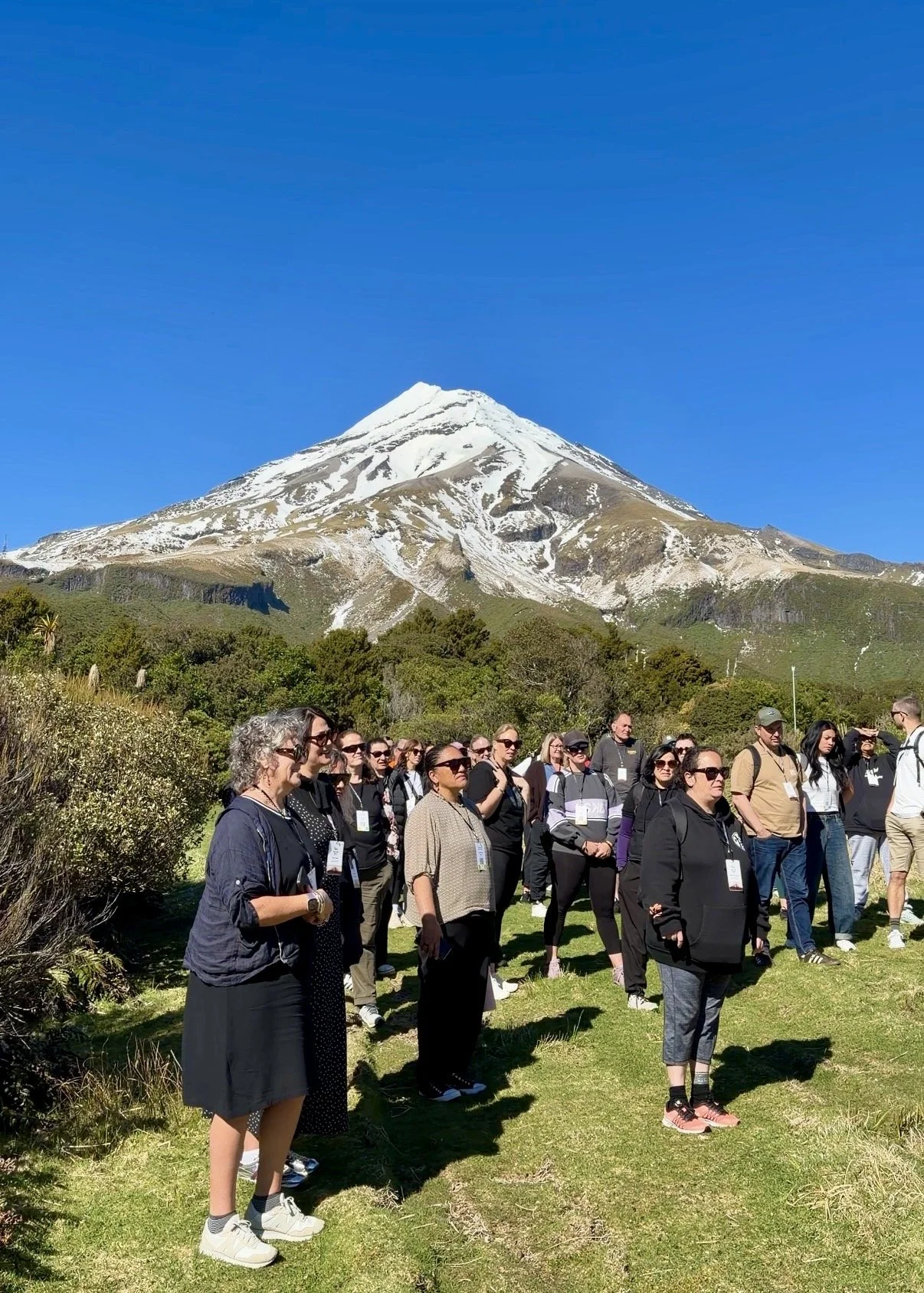
Most importantly it sharpened their resolve to continue their MAC journey as School Cultural Leaders of the future.
We acknowledge our hosts. To mana whenua, Te Kāhui o Taranaki Maunga, thank you for welcoming us so warmly onto your whenua. To our MAC whanau who whakapapa to Taranaki Maunga - Damon Ritai, Scott Walden Tiaki Pokere and Whaea Tiri Bailey and to our speakers throughout the Hui ā Tau, thank you for so generously sharing your kōrero, your stories and your time.
Ngā mihi nui ki ō mātou kaimahi. A hui of this size does not happen without many hands, and we acknowledge those who worked tirelessly behind the scenes and alongside us throughout the Hui ā Tau. Our heartfelt thanks go to the Te Arahou o Aotearoa Operations Team, Helen and Te Hiringa, whose careful planning and organisation ensured everything ran smoothly, and to our Kaihoe Mātauranga, who guided, supported and cared for our tumuaki every step of the way.
We also acknowledge the many delegates who stepped forward as kaikōrero and kaikaranga, those who gave a mihi to our speakers or picked up the guitar and led us in waiata. Your generosity of spirit embodied the collaboration and manaakitanga that sit at the very heart of the MAC Kaupapa.
Liz Hawes
Secretary
Te Arahou o Aotearoa Board
